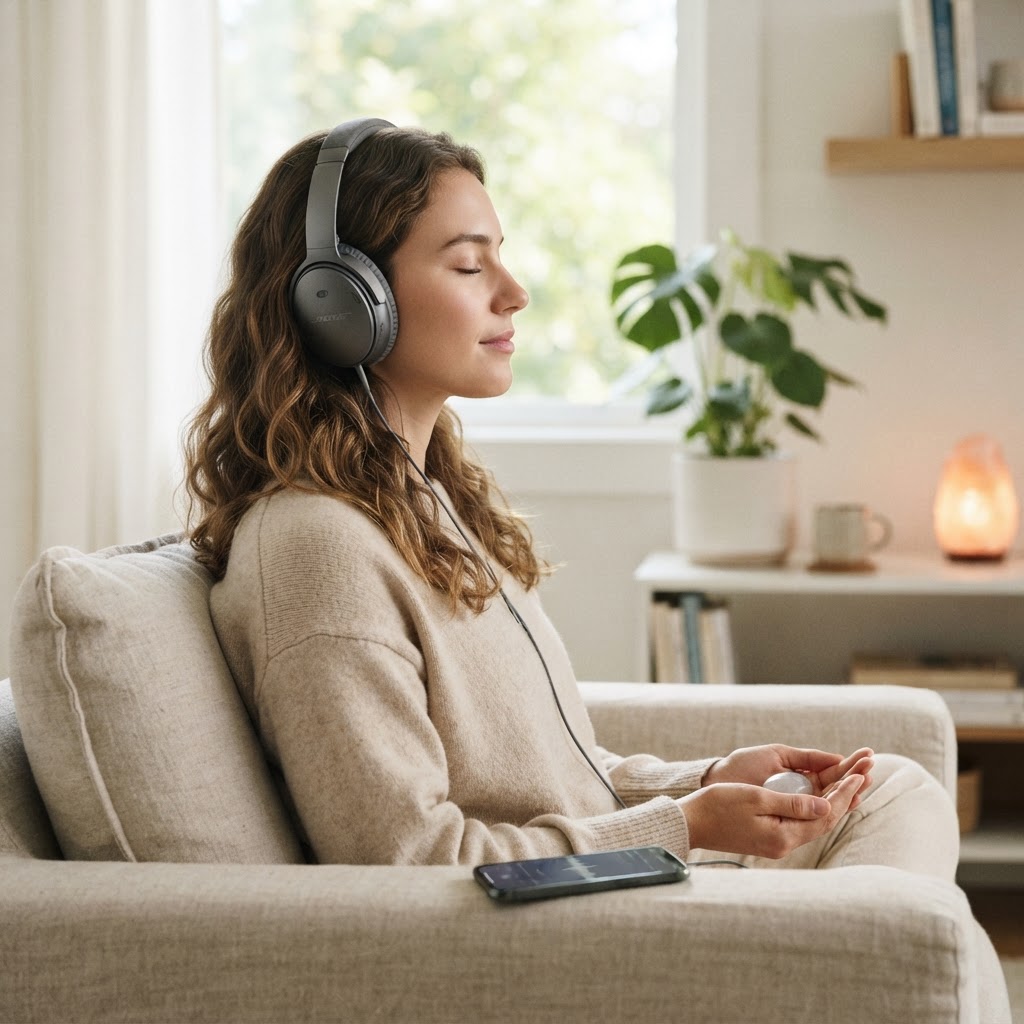
The modern human exists in a state of chronic sympathetic nervous system arousal, a physiological environment characterized by elevated cortisol and a restricted capacity for recovery. Emerging neuroscientific research suggests that we can bridge the gap between auditory perception and autonomic regulation by utilizing binaural beats to systematically modulate heart rate variability (HRV), offering a non-invasive tool for recalibrating our internal stress response.
Key Takeaways
- Binaural beats operate on the principle of auditory beat frequency, inducing brainwave entrainment that can influence autonomic nervous system (ANS) activity.
- Heart Rate Variability (HRV) serves as a primary biomarker for resilience, reflecting the delicate balance between sympathetic "fight-or-flight" and parasympathetic "rest-and-digest" states.
- Research published by the National Institutes of Health (NIH) indicates that consistent auditory stimulation can lower resting heart rates and improve psychological markers of stress.
- Integrating tools like a biometric tracking ring allows for the precise measurement of how auditory interventions shift an individual’s autonomic baseline over time.
- By leveraging specific frequency ranges—typically in the Alpha or Theta spectrum—users can transition from high-arousal states to states conducive to autonomic recovery.
The Physiology of the Auditory-Autonomic Bridge
The relationship between the auditory system and the autonomic nervous system is far more integrated than previously understood. When sound waves enter the ear, they are processed not only by the auditory cortex but also by the brainstem, where the vagus nerve—the command center of the parasympathetic nervous system—resides. By introducing binaural beats, which involve presenting two slightly different frequencies to each ear, the brain creates a perceived "third" frequency equal to the difference between the two. This phenomenon, known as frequency following response (FFR), allows external auditory stimuli to act as a pacemaker for internal neurological activity.
According to research reviewed by the Cleveland Clinic, the brain’s ability to synchronize its electrical oscillations with these external frequencies can directly signal the body to downregulate its stress response. As the brain enters a state of deep relaxation, the vagus nerve is stimulated, which inherently increases HRV. High HRV is a clinical marker of a robust, adaptable system, suggesting that the body is not just surviving under stress but is capable of efficiently recovering from it. This mechanism essentially turns the auditory system into a control panel for the autonomic nervous system, providing a pathway to bypass the conscious, often reactive, stress response.
Understanding HRV as a Metric of Resilience
Heart Rate Variability represents the variation in time intervals between consecutive heartbeats, often measured in milliseconds. Unlike a static heart rate, which only measures the average number of beats per minute, HRV provides a granular look at the efficiency of the autonomic nervous system. A higher HRV typically indicates that the body is highly responsive to environmental changes and stressors, functioning with the flexibility required for optimal health. Conversely, low HRV is often associated with chronic stress, anxiety, and a diminished ability to self-regulate, a condition frequently noted in data sets monitored by the Mayo Clinic.
To effectively track these subtle shifts, many practitioners now rely on a biometric tracking ring to capture continuous, high-fidelity data on nightly recovery and daytime stress fluctuations. By observing how these numbers trend over several weeks, individuals can correlate their environmental exposures—including auditory environments—with their physiological readiness. When users begin to utilize auditory entrainment, they are often looking for an increase in their RMSSD (Root Mean Square of Successive Differences), the standard metric for short-term HRV. This data-driven approach moves the practice of stress management from a subjective "feeling" to an objective, measurable health outcome.
The Science of Brainwave Entrainment
Brainwave entrainment refers to the process of coaxing the brain's electrical rhythms to oscillate at a specific frequency through rhythmic sensory input. The human brain typically operates across five primary frequency bands: Delta, Theta, Alpha, Beta, and Gamma. While Beta waves (13–30 Hz) are associated with active thinking and, at higher levels, anxiety, the Theta (4–8 Hz) and Alpha (8–13 Hz) bands are deeply linked to relaxation and internal reflection. When individuals utilize binaural beats audio software to generate these specific frequencies, they are effectively shifting their neurological "gear" from high-stress analytical processing to a state of internal coherence.
Scientific literature often points to the efficacy of these sounds in clinical populations experiencing pre-surgical anxiety or chronic pain. The mechanism relies on the brain’s tendency to minimize the energy required to process stimuli, eventually adopting the rhythm of the binaural beat as its dominant frequency. This transition often results in a decrease in the hormone cortisol and an increase in the secretion of neurotransmitters like acetylcholine, which facilitate a calm, alert state. By intentionally choosing the frequency of one's auditory environment, an individual can create an internal landscape that is far more hospitable to homeostasis.
Environmental Optimization for Auditory Therapy
While the choice of sound frequency is paramount, the clarity and isolation of the delivery method are equally important for the efficacy of the intervention. To fully reap the physiological benefits of binaural beat therapy, one must minimize external acoustic interference that could distract the brain from the entrainment signal. Using professional-grade noise cancelling headphones ensures that the differential between the left and right ear frequencies remains consistent, preventing the "leaking" of sound that occurs with inferior audio equipment. Without proper isolation, the brain struggles to process the math of the binaural beat, and the autonomic benefit is significantly diminished.
Beyond just the audio equipment, the broader environment plays a role in how the body processes these signals. Many users find that pairing audio therapy with an aromatherapy diffuser—using scents like lavender or bergamot—creates a multisensory environment that lowers the threshold for entering a parasympathetic state. This convergence of sensory inputs signals to the nervous system that the environment is "safe," which is a prerequisite for long-term physiological repair. By standardizing the physical space, you allow the brain to focus entirely on the auditory cues, accelerating the shift toward higher HRV and improved autonomic regulation.
Integrating Physical Comfort and Sensory Alignment
The body’s physical posture and comfort level play a vital role in how effectively the autonomic nervous system responds to entrainment. It is difficult to reach a state of deep physiological recovery if the musculoskeletal system is under tension or if the body is physically restless. Utilizing a firm, ergonomic meditation cushion can help align the spine, allowing for unobstructed blood flow and promoting the deep, diaphragmatic breathing that is essential for activating the parasympathetic branch of the nervous system. When the body is physically supported, the autonomic nervous system is more receptive to the "rest-and-digest" cues provided by the auditory stimulus.
For many users, the transition into a parasympathetic state is further enhanced by physical grounding techniques, such as the use of a weighted blanket. The gentle, consistent pressure of a weighted blanket provides proprioceptive input that can decrease heart rate and promote the secretion of serotonin. When combined with binaural beats, this creates a "cocoon" effect that accelerates the drop into the Alpha or Theta brainwave states. This combination of physical comfort and neural entrainment creates a synergistic effect, where the body’s physical readiness facilitates a faster and deeper neurological response to the auditory stimuli.
Addressing Barriers to Consistent Practice
The primary challenge in modulating autonomic function is consistency, as the nervous system requires repetitive reinforcement to shift its "default" setting. Many individuals struggle with the discipline required to sit for 20 to 30 minutes daily to facilitate this neurological change. To overcome this, it is helpful to frame binaural beat listening not as an "extra" task, but as a non-negotiable recovery ritual. The most successful practitioners integrate these sessions into times of transition—perhaps first thing in the morning upon waking or immediately after returning from a high-stress workday—to reset the autonomic baseline before it becomes chronically dysregulated.
Additionally, it is important to avoid the temptation of "multitasking" while listening. Research shows that while the brain can process binaural beats while performing simple tasks, the physiological impact on HRV is significantly higher when the user remains in a state of intentional rest. If environmental noise remains an issue in your living or working space, consider using high fidelity earplugs for periods of study or focus, saving your noise-cancelling equipment for dedicated auditory recovery sessions. By creating distinct "recovery zones" in your daily schedule, you reinforce the neural pathways that lead to physiological resilience, ultimately making the transition to a relaxed state more efficient over time.
How to Apply This
- Establish a Baseline: Spend two weeks tracking your HRV using a biometric tracking ring to understand your current autonomic resilience.
- Select Your Frequency: Use binaural beats audio software to choose a 10Hz (Alpha) frequency for active relaxation or a 6Hz (Theta) frequency for deeper recovery or meditation.
- Optimize the Environment: Find a quiet space, sit on a supportive meditation cushion, and use noise cancelling headphones to ensure signal clarity.
- The 20-Minute Protocol: Engage in 20 minutes of uninterrupted listening. During this time, focus on "box breathing" (inhale for 4, hold for 4, exhale for 4, hold for 4) to manually encourage vagal tone.
- Analyze the Data: Check your biometric tracker after your sessions. Note any correlations between your auditory practice and improved HRV scores during the subsequent recovery period.
FAQ
Can binaural beats replace medical treatment for anxiety or heart conditions? No. Binaural beats are a complementary wellness tool for managing stress and supporting autonomic health, not a treatment for clinical medical conditions. Always consult a primary care physician before beginning a new wellness regimen.
How long does it take to see changes in HRV? While some individuals feel a subjective shift in mood immediately, measurable changes in HRV often take 3–6 weeks of consistent daily practice. The nervous system requires time to adapt to new regulatory patterns.
Is there a best time of day to listen to these sounds? Many experts suggest listening in the morning to set a resilient tone for the day, or in the evening to facilitate the "rest-and-digest" state required for deep, restorative sleep.
Do I need expensive equipment to see results? While high-quality noise-cancelling headphones improve the clarity of the beat, the primary requirement is a pair of stereo headphones that can clearly separate the two frequencies. The most important factor is the consistency of your practice.
Disclaimer: Educational information only — not medical advice.