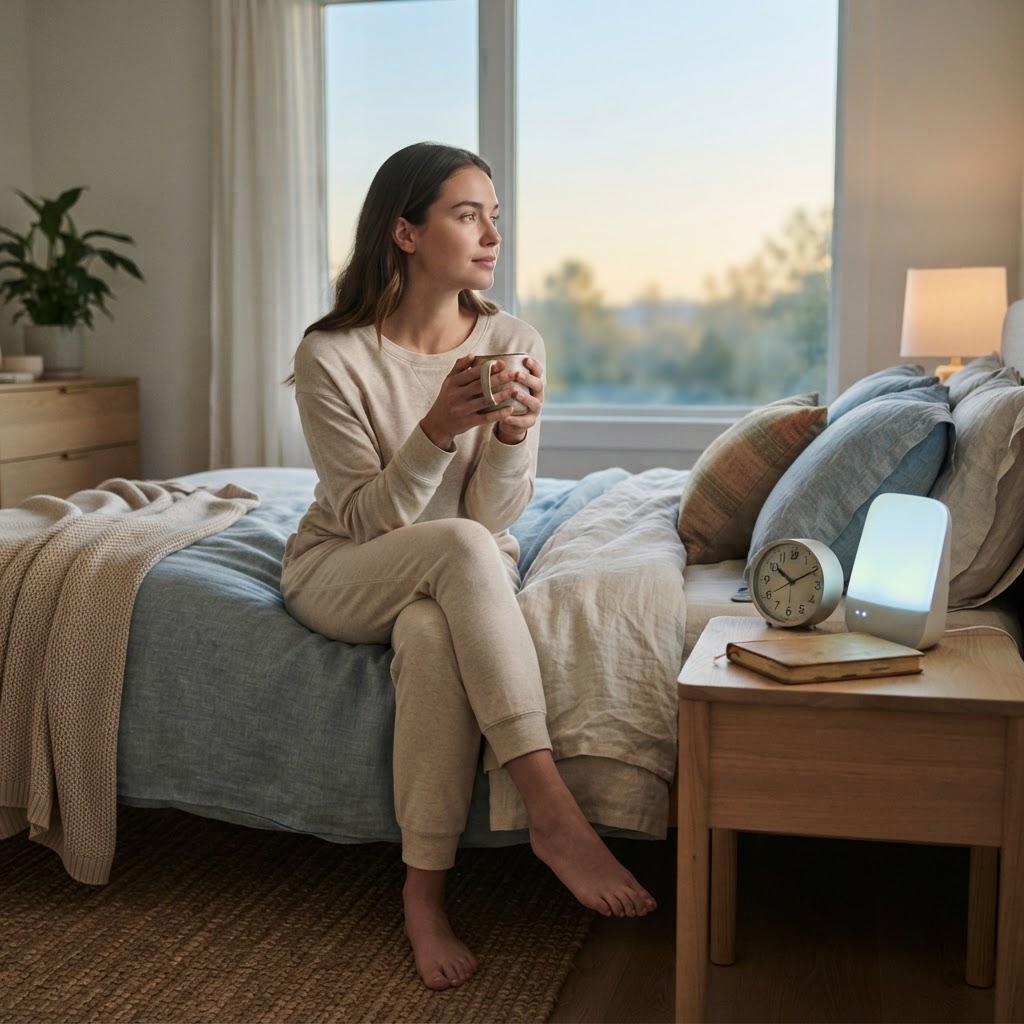
For decades, we have viewed light merely as a utility for vision, yet emerging chronobiology reveals that the specific wavelengths of our environment act as the primary zeitgeber—or time-giver—for our internal hormonal landscape. By strategically modulating our exposure to different light spectra throughout the day, we can fundamentally recalibrate our metabolic and sleep-wake cycles to match our evolutionary physiology.
Key Takeaways
- Circadian misalignment is a leading driver of metabolic disruption, as hormonal synthesis—particularly for melatonin and cortisol—is strictly dependent on light wavelength.
- Short-wavelength "blue" light (450–480 nm) is essential during morning hours to suppress melatonin and boost alertness but acts as a physiological stressor when encountered after sunset.
- Melatonin production is inhibited by photoreceptive ganglion cells in the retina that are exquisitely sensitive to blue-enriched lighting, requiring a transition to warmer, red-shifted light in the evening.
- Using a lux light meter can help you objectively measure whether your workspace or living environment provides enough intensity to entrain your rhythms effectively.
- A combination of targeted exposure in the morning and precise light restriction in the evening can significantly improve sleep latency and hormonal balance.
The Photobiological Foundation of Human Rhythm
The human circadian system is not located in the eyes themselves, but rather in the suprachiasmatic nucleus (SCN) of the hypothalamus, which acts as the body's master clock. This internal pacemaker synchronizes our peripheral clocks—those found in the liver, gut, and heart—via neural and hormonal pathways. According to research published by the National Institutes of Health (NIH), the SCN is highly sensitive to light signals received via intrinsically photosensitive retinal ganglion cells (ipRGCs). These cells contain melanopsin, a photopigment that is uniquely responsive to the blue end of the visible light spectrum.
When light hits these ipRGCs, it sends a direct signal to the SCN, which subsequently suppresses the pineal gland’s production of melatonin. This mechanism is an evolutionary adaptation meant to alert the body that the sun has risen and it is time to initiate the production of cortisol. However, in our modern era of artificial interior lighting, we frequently send "daytime" signals to our brain at 10:00 PM. This mismatch, often referred to as "circadian desynchrony," has been linked by the World Health Organization to various chronic health issues, ranging from mood disorders to metabolic syndrome.
The Morning Surge: Awakening the SCN
To optimize the hormonal synthesis cycle, the day must begin with high-intensity, full-spectrum light exposure to signal to the body that the restorative phase has concluded. Morning light exposure triggers an immediate "cortisol awakening response," which primes the body for metabolic activity and sets the stage for a healthy melatonin spike roughly 14 to 16 hours later. Clinical evidence from the Mayo Clinic suggests that 20 to 30 minutes of bright light exposure shortly after waking can drastically improve energy levels in individuals suffering from seasonal affective disorder or delayed sleep phase syndrome.
If you struggle to get natural sunlight during the early morning hours, particularly in winter months, a full spectrum light therapy lamp can mimic the intensity and color temperature of the sun. These devices are designed to provide the specific lux levels (often 10,000 lux) required to inhibit melatonin effectively and trigger the alerting signal. By stabilizing this morning spike, you create a physiological anchor point for the rest of your daily hormonal fluctuations.
Blue Light: The Double-Edged Sword
Blue light is not inherently "bad," but its timing is everything; it is a vital tool for daytime alertness but a potent inhibitor of biological repair during the night. The blue light spectrum—typically ranging from 450nm to 480nm—is the most effective at triggering melanopsin. While this is advantageous during the day, light pollution in modern homes from LEDs, smartphone screens, and computer monitors keeps the SCN in a state of hyper-arousal. This effectively tells the body that it is still midday, preventing the onset of sleepiness.
To mitigate this, you can transition your home lighting environment as the day progresses. Installing a smart bulb color changing system allows you to automatically shift your home’s lighting from a cool, daylight-white (6000K) in the morning to a warm, amber, or red-tinted light (2700K or lower) in the evening hours. This transition helps the brain distinguish between the high-alert phase of the day and the winding-down phase of the evening. If you must use screens, wearing blue light blocking glasses can filter out the specific wavelengths that interfere with your nocturnal hormonal transition.
The Role of Melatonin and Dim Light Melatonin Onset
Melatonin is often referred to as the "hormone of darkness," but it is more accurately described as a marker of biological night. The onset of melatonin production, known as Dim Light Melatonin Onset (DLMO), usually occurs about two hours before a person naturally falls asleep. If you are exposed to bright light right up until the moment you crawl into bed, you effectively delay your DLMO, which makes falling asleep significantly more difficult.
Many people attempt to correct this with supplementation, but natural production is far more potent and sustained. If you find your natural melatonin production is lagging, prioritize creating a dark environment in the evening. This means moving away from overhead lighting and utilizing floor lamps or indirect lighting sources. The goal is to create a "dim light" environment that encourages the pineal gland to perform its work naturally rather than relying exclusively on exogenous inputs.
Creating a Dark Sanctuary for Hormonal Synthesis
Hormonal repair during the night requires a complete absence of light, as even low levels of photon penetration through the eyelids can reach the retina and disturb the SCN. Research indicates that even dim ambient light in the bedroom can suppress melatonin levels, leading to fragmented sleep cycles. To ensure the highest quality of rest, your sleep environment should be as close to absolute darkness as possible, which requires mitigating light pollution from both internal and external sources.
Installing blackout curtains is the single most effective way to eliminate light pollution from streetlights, moon cycles, or passing vehicles. For those who find curtains insufficient, or for those who travel frequently, a high-quality, contoured sleep mask serves as an indispensable tool to ensure 100% occlusion of light. By protecting your eyes from stray photons, you maximize the efficiency of your nocturnal hormonal synthesis and help regulate the body's repair mechanisms, including the clearance of metabolic waste products from the brain.
The Chronobiology of Alarm Clocks
The way we wake up is just as important as the way we go to sleep. Traditionally, alarms are designed to create a sharp, jarring transition from deep sleep to full alertness, which can trigger an unnecessary stress response. Modern chronobiology suggests that waking up during a REM cycle or a deep sleep phase can lead to "sleep inertia," a state of prolonged grogginess that can last for hours.
A circadian rhythm alarm clock is designed to solve this by simulating a sunrise. These devices gradually increase light intensity over a period of 20 to 30 minutes before the audible alarm sounds. This gentle increase in light signals to the brain that the transition from sleep to wakefulness is imminent, allowing the body to begin its cortisol release gradually rather than in a state of panic. This creates a much smoother physiological ramp-up, improving mood and cognitive function throughout the morning.
How to Apply This
- Morning Entrainment: Immediately upon waking, get 15–20 minutes of natural outdoor light or use a light therapy lamp. This is your most important daily anchor for circadian health.
- Monitor Your Environment: Use a lux light meter (available as a smartphone app or handheld device) to check the light intensity in your home office. Aim for at least 1,000–2,000 lux during the workday to keep alertness high.
- Sunset Transition: Two hours before bed, switch all your lighting to warm, low-intensity settings. If you cannot change your bulbs, wear blue light blocking glasses while watching television or reading to keep your natural melatonin rhythm intact.
- Optimize the Bedroom: Ensure your bedroom is a "cave." Use blackout curtains to block external light and a sleep mask for a guaranteed dark environment.
- Steady Waking: Swap your harsh digital alarm for a sunrise-simulating alarm clock to support a natural, less stressful hormonal release in the morning.
FAQ
Does blue light exposure at night permanently damage my sleep? While it does not cause permanent damage, it creates a "phase delay" that makes it harder to fall asleep and reduces the quality of your deep sleep stages. Over time, consistent phase delays can contribute to chronic sleep deprivation and hormonal imbalances.
Can I just take a melatonin supplement instead of fixing my light exposure? Melatonin supplements can help with sleep onset, but they do not replace the complex, pulsatile release of your body's natural hormones. Managing your light environment is a more comprehensive approach to regulating your entire circadian clock, not just the onset of sleep.
How do I know if my circadian rhythm is off? Common signs include persistent grogginess in the morning, an inability to fall asleep at your desired bedtime, reliance on excessive caffeine throughout the day, and feeling more alert at night than during the daylight hours.
Are all light therapy lamps the same? No. Look for lamps that are specifically designed for phototherapy, which should be flicker-free and capable of delivering at least 10,000 lux at a comfortable distance. Always ensure they are rated to filter out harmful ultraviolet (UV) radiation.
Disclaimer: Educational information only — not medical advice.