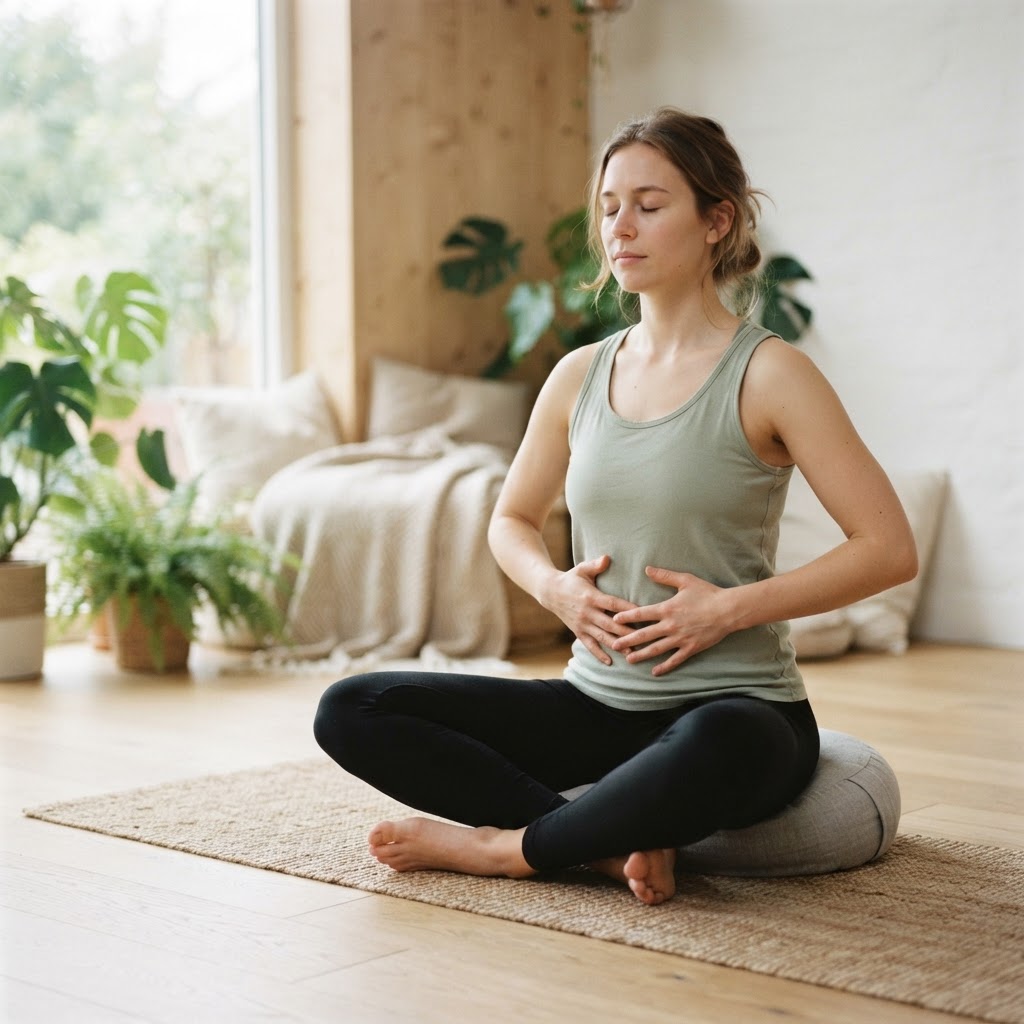
The rhythm of your breath is not merely a survival necessity; it is a sophisticated biological lever capable of modulating the internal environment of your nervous system. By mastering the mechanics of diaphragmatic engagement, you can actively dial down systemic inflammation and enhance vagal tone, shifting your physiology from a state of chronic defensive arousal to one of restorative repair.
Key Takeaways
- Diaphragmatic breathing directly stimulates the vagus nerve, the primary conductor of the parasympathetic nervous system, which governs the "rest-and-digest" response.
- Chronic shallow breathing patterns maintain the body in a low-grade sympathetic state, which is strongly correlated with increased pro-inflammatory cytokine production.
- Scientific evidence confirms that controlled, slow-paced respiration can reduce markers of inflammation such as C-reactive protein (CRP) and Interleukin-6 (IL-6).
- Integrating mechanical aids, such as a breath training device, can help strengthen the diaphragm and ensure proper recruitment of core musculature.
- Consistent practice creates "vagal resilience," allowing the body to return to homeostasis more efficiently after stressors are removed.
The Anatomy of the Breath-Inflammation Axis
At the heart of the breath-inflammation connection lies the vagus nerve, the longest cranial nerve in the body, which winds from the brainstem through the neck and down into the abdominal cavity. When we breathe shallowly into the chest, we trigger a cascade of sympathetic nervous system responses, signaling a "fight-or-flight" state that the body interprets as an environmental threat. The NIH notes that when this state becomes chronic, the body begins to mobilize inflammatory defenses, leading to systemic stress that can impair immune regulation. By engaging the diaphragm—the primary muscle of respiration—we physically massage the vagus nerve as the muscle descends, sending a direct neural signal to the brain that the environment is safe.
This mechanical stimulus facilitates the "cholinergic anti-inflammatory pathway," a reflex that inhibits the production of pro-inflammatory cytokines when the vagus nerve is properly activated. According to research published in journals such as Frontiers in Physiology, this pathway acts as a rapid-response system to keep the body’s inflammatory load in check. When our mechanics are off, we bypass this natural braking system, leaving the immune system in a state of hyper-vigilance. Learning to breathe deep into the belly is not just a mindfulness technique; it is a fundamental act of physiological regulation.
Measuring Physiological Resilience
To understand how your breathing influences your internal state, you must first establish a baseline through objective data. A biofeedback heart rate monitor is an excellent tool for visualizing how specific breathing cadences directly affect your Heart Rate Variability (HRV). HRV is the variation in the time interval between heartbeats, and a higher HRV is widely recognized by the Cleveland Clinic as a reliable indicator of a robust, adaptive autonomic nervous system. When you breathe with a slow, rhythmic pattern, you sync your respiratory rate with your heart rhythm, a phenomenon known as respiratory sinus arrhythmia.
If you are just beginning to track your vitals, it is helpful to monitor your blood oxygen saturation using a pulse oximeter during your practice. While oxygen levels are typically stable in healthy individuals, observing them during a controlled breathing session provides a visceral connection to the efficiency of your gas exchange. Higher efficiency at the alveolar level minimizes the oxidative stress associated with inefficient, rapid breathing. By using data to inform your breath mechanics, you turn an invisible process into a measurable, improvable skill set that benefits your long-term health.
The Role of Posture in Diaphragmatic Excursion
The diaphragm does not work in isolation; it functions as part of a integrated core system that includes the pelvic floor, the transverse abdominis, and the spinal stabilizers. If your posture is compromised—often due to sedentary desk work or forward-head carriage—the diaphragm is physically restricted, limiting its ability to descend fully. To optimize this movement, many practitioners benefit from using an ergonomic lumbar support cushion to maintain a neutral spine. A neutral, supported spine allows the diaphragm to operate through its full range of motion, which is essential for maximizing tidal volume and effectively signaling the autonomic nervous system.
Beyond spinal support, the peripheral muscles often tighten in response to the bracing patterns associated with chronic stress. Utilizing a foam roller on the thoracic spine and the lateral ribcage can help release the myofascial tension that restricts chest wall expansion. When these tissues are supple, the ribs can move freely during inhalation, facilitating the expansion of the lower lobes of the lungs where the diaphragm has the most impact. If your ribcage is rigid, your brain receives feedback that the body is braced for impact, which can inadvertently sustain feelings of anxiety and systemic tension.
Integrating Mindful Mechanics
Once the physical body is aligned, the next step involves refining the mental approach to breath control. This is not about forced hyper-ventilation, but rather a slow, rhythmic cycle that emphasizes the exhale. The Mayo Clinic identifies slow breathing as a key intervention for reducing blood pressure and heart rate, partly because it slows the metabolic demand on the body. A mindfulness meditation journal serves as a vital companion during this process, allowing you to document not just the length of your sessions, but the qualitative shifts in your mood, digestion, and tension levels over time.
Research in Nature suggests that daily practice of slow, controlled breathing increases the production of neurotransmitters like GABA, which promotes calmness and stabilizes mood. By documenting your experiences, you begin to see the correlation between your breath-work sessions and your general capacity for emotional regulation. This is the foundation of long-term autonomic balance. Consistency is more important than duration; ten minutes of daily diaphragmatic focus is significantly more impactful for vagal tone than an hour of sporadic, intense practice.
The Sympathetic-Parasympathetic Seesaw
The human nervous system is designed to oscillate between sympathetic activation (action) and parasympathetic dominance (recovery). Problems arise when we get "stuck" in the sympathetic lane, a state characterized by high cortisol, shallow respiration, and chronic inflammatory markers. Chronic inflammation is the silent partner to nearly every modern lifestyle disease, from heart disease to metabolic syndrome. The simple act of belly breathing acts as the pivot point on this seesaw, forcing the body to transition toward the parasympathetic side.
Evidence from the World Health Organization emphasizes that psychosocial stress is a significant driver of non-communicable diseases. By utilizing the breath as a regulatory tool, you are essentially practicing a form of "internal medicine" that requires no prescription, only presence. As you deepen the breath, you signal the hypothalamus to throttle back the release of stress hormones, effectively lowering the chemical burden on your systemic tissues. This is not about eliminating stress entirely, but about increasing your "recovery velocity"—how quickly your body regains its calm after a stressful event.
Creating a Dedicated Space for Practice
The environment in which you practice matters; your body will eventually associate specific sensory inputs with the calm of diaphragmatic breathing. Establishing a dedicated space for your practice, perhaps using a high-quality yoga mat as a physical anchor for your sessions, helps the nervous system anticipate the shift into a parasympathetic state. When you step onto your mat, the neural circuitry associated with relaxation is primed, making the transition easier than if you were to practice in a high-stress area like a desk.
In this dedicated space, focus on "360-degree breathing," where you feel the expansion not just in the front of the belly, but into the sides of the ribs and the lower back. This full-body recruitment ensures that the diaphragm is truly engaged rather than just pushing the abdominal wall forward. As you master this, you may find that your natural, resting breathing rate begins to drop—a sign that your autonomic nervous system is becoming more efficient and less reactive to minor triggers.
How to Apply This
- Conduct a Daily Assessment: Use a biofeedback heart rate monitor for five minutes in the morning to observe your resting heart rate and HRV.
- Optimize Your Environment: Ensure you are sitting or lying with proper spinal alignment; if seated at a desk, utilize an ergonomic lumbar support cushion to ensure the diaphragm is unencumbered.
- Practice Controlled Exhales: Spend 5–10 minutes performing "box breathing" (inhale for 4, hold for 4, exhale for 4, hold for 4) to manually force the transition into parasympathetic dominance.
- Log the Results: Spend two minutes in your mindfulness meditation journal documenting how your physical body feels before and after your breath practice.
- Incorporate Movement: Use a foam roller on your thoracic spine to mobilize the ribcage before starting your formal breath-work session to ensure maximum respiratory capacity.
FAQ
Can I breathe "too much" during these exercises? Yes. Over-breathing (hyperventilation) can lower CO2 levels, leading to dizziness or tingling. Always keep the breath slow, gentle, and quiet. If you feel lightheaded, return to your natural rhythm immediately.
How long does it take to see changes in vagal tone? Many people feel an immediate sense of calm after a single session. However, structural changes to your nervous system, such as improved HRV and reduced baseline inflammation, typically manifest after 4–8 weeks of consistent daily practice.
Does it matter if I breathe through my nose or mouth? Nasal breathing is highly recommended. It filters, warms, and humidifies the air, and stimulates the release of nitric oxide, which helps dilate blood vessels and improve oxygen delivery throughout the body.
Can I use these techniques while exercising? Absolutely. Learning to maintain diaphragmatic breathing during light exercise helps improve endurance and prevents the "gasping" pattern that triggers a sympathetic stress response.
Disclaimer: Educational information only — not medical advice.